
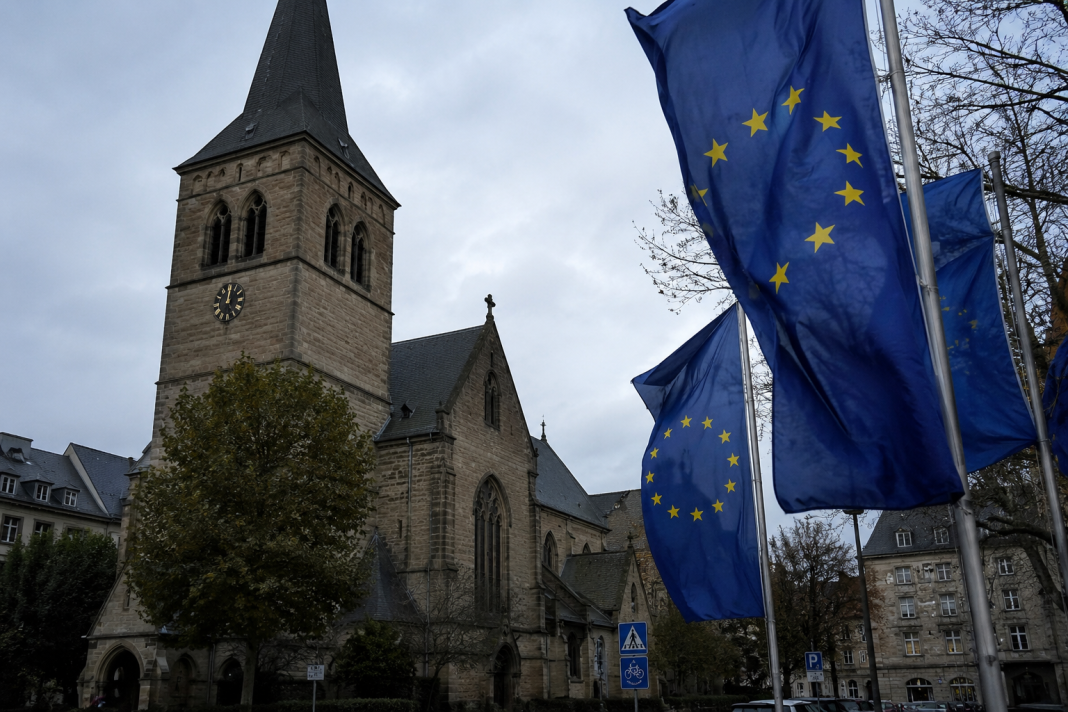
The European Evangelical Alliance (EEA) has released a new statement seeking to clarify what it means to be an evangelical, saying the term should not automatically be associated with right-wing politics or political nationalism.
Representing evangelical Christians across Europe, the EEA said it has become increasingly concerned that the word “evangelical” is being misunderstood in public discussions, often because of political developments outside Europe—particularly in the United States.
According to the organisation, many people now mistakenly use “evangelical” as a political label rather than recognising it as a description of Christian faith. In its statement, the EEA said the growing confusion has led some politicians, journalists and members of the public to wrongly assume that evangelical Christians in Europe are closely aligned with certain political movements or ideologies.
The alliance explained that while the term has often been linked to the American political landscape for decades, evangelical churches across Europe are diverse in culture, nationality and political opinion.
Instead, the organisation stressed that the evangelical identity is rooted in the Gospel of Jesus Christ.
It said evangelicals are united by their commitment to the Bible, the teachings of Jesus and the call to love God and love their neighbours. Sharing the Good News of Jesus Christ, the EEA said, remains at the heart of the evangelical movement.
The alliance also emphasised that it is strictly non-partisan when it comes to political parties and does not represent any particular political agenda.
Addressing the growing discussion around the phrase “Christian nationalism,” the EEA acknowledged that the term is often used in different ways and should be understood carefully.
The organisation said loving one’s country is not wrong in itself, nor is it inappropriate for Christians to contribute biblical values to public conversations. However, it drew a clear distinction between patriotism and any ideology that promotes intolerance, exclusion, coercion or political dominance in the name of Christianity.
According to the statement, the vast majority of evangelicals in Europe reject any form of Christian identity that is used to justify hatred, division or the exclusion of others.
Rather than focusing on political labels, the EEA concluded its statement by encouraging Christians across Europe to remain committed to prayer, serving their communities and faithfully living out the message of the Gospel.
The statement comes at a time when discussions surrounding faith, politics and national identity continue to receive increasing attention across Europe and beyond. By releasing this clarification, the alliance says it hopes people will better understand that, for millions of evangelicals, their primary identity is not found in politics but in their faith in Jesus Christ.