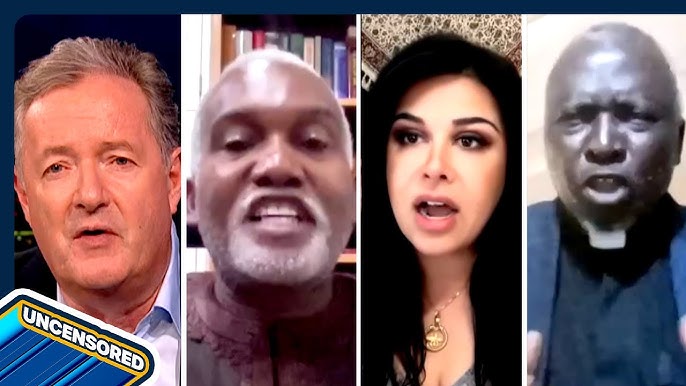
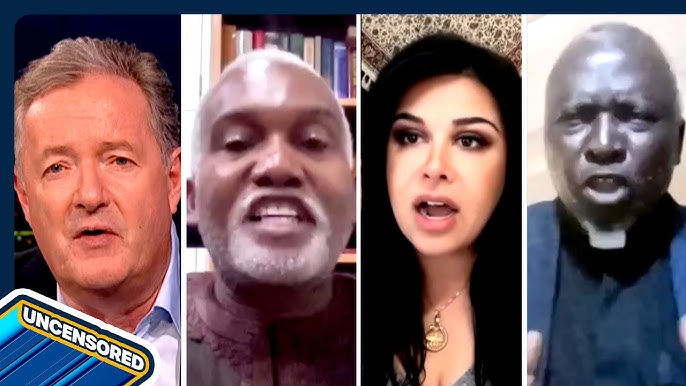
When Reverend Ezekiel Dachomo sat across from Piers Morgan, the world expected a conversation.
What it got was a lament. A warning. A plea wrapped in the voice of a man who has stood over far too many graves.
There was no dramatic music, no cinematic buildup — just a pastor whose face carried the weight of stories the world has not been willing to hear. As he spoke, it became clear that this wasn’t political commentary. It wasn’t propaganda. It was the raw truth of someone who has buried more Christians than most people have ever met.
“We Buried 501 in One Night.”
The Pastor Surrounded by Graves
Dachomo recalled scenes few of us could ever imagine. He said he had personally overseen more than seventy mass burials — burials so large, so devastating, that the numbers seemed almost impossible to comprehend. In one case, he explained that a single grave held hundreds of Christians killed overnight.
He described this as nothing less than a genocide — not random violence, not isolated attacks, but a targeted, intentional wiping out of Christian communities. The calmness in his voice did not soften the horror; instead, it made it more real.
For many watching, this was the first time they had ever heard such accounts spoken with such clarity and conviction.
Government Silence, Shadows, and Accusations
What unsettled viewers even more than the violence was Dachomo’s insistence that a grave injustice was being covered up.
He accused the Nigerian government of downplaying, minimizing, or outright ignoring the crisis. He suggested that elements within the political system were complicit — not just through negligence, but through active involvement. He referenced claims that Boko Haram had been deliberately empowered to remove Christian leadership from power years ago, and that because influential Islamic figures dominate key positions, Christian massacres rarely receive proper acknowledgment.
These remain allegations — serious ones that require international investigation — but they reflect a fear buried deep within many Nigerian Christian communities: that the people meant to protect them may be looking the other way.
A Plea to the Nations: “We Need You to Pay Attention.”
Reverend Dachomo did not come on Piers Morgan simply to recount tragedy. He came to sound an alarm.
His plea was unmistakable. Nigeria, he said, cannot solve this alone. Christian communities cannot keep burying their loved ones without the world taking notice. He called for global accountability, international pressure, and honest intervention — not political statements, not half-hearted condemnations, but real attention from those who can influence change.
This interview has given voice to those who have been crying in the dark.
The Price of Speaking Out
The pastor’s appearance has not come without consequences. Reports circulated that his Facebook account was removed following his boldness. He has reportedly received death threats. Yet he continues, knowing the risks, knowing the cost.
Whether one agrees with every detail he shared or not, his courage is unquestionable.
There is something unmistakable about a man who risks his life to tell the world what he believes is happening to his people.
Why the Interview Matters — And Why the World Must Not Look Away
The impact of this conversation stretches far beyond Nigeria.
It demands attention from:
- Christians worldwide who believe in the unity of the global Church
- Governments who claim to stand for human rights
- International organizations tasked with monitoring genocide and mass violence
The number of dead may still require verification. The scale of the violence deserves thorough investigation. But the emotional truth — the suffering, the fear, the trauma — cannot be dismissed.
What we saw in that interview was not merely information. It was desperation.
Where Caution Meets Compassion
As a responsible community of believers and writers, we must acknowledge the complexity. These are heavy claims, and they demand independent verification. There are political tensions, conflicting narratives, and potential motives on all sides.
But “be cautious” does not mean “be silent.”
It means we listen carefully.
We investigate responsibly.
We pray earnestly.
We advocate wisely.
And above all, we refuse to ignore the cries of Christians who say they are being slaughtered.
A Final Word: This Is the Moment the Church Must Not Miss
Dachomo’s testimony leaves the Body of Christ with a question that cannot be shrugged off:
Now that we have heard… what will we do?
Will we pray for Nigeria?
Will we speak up?
Will we challenge our leaders to act?
Will we share the truth?
Or will this interview become another moment forgotten in a world drowning in headlines?
The persecuted Church is bleeding.
A pastor has risked his life to tell us.
And heaven is watching our response.