
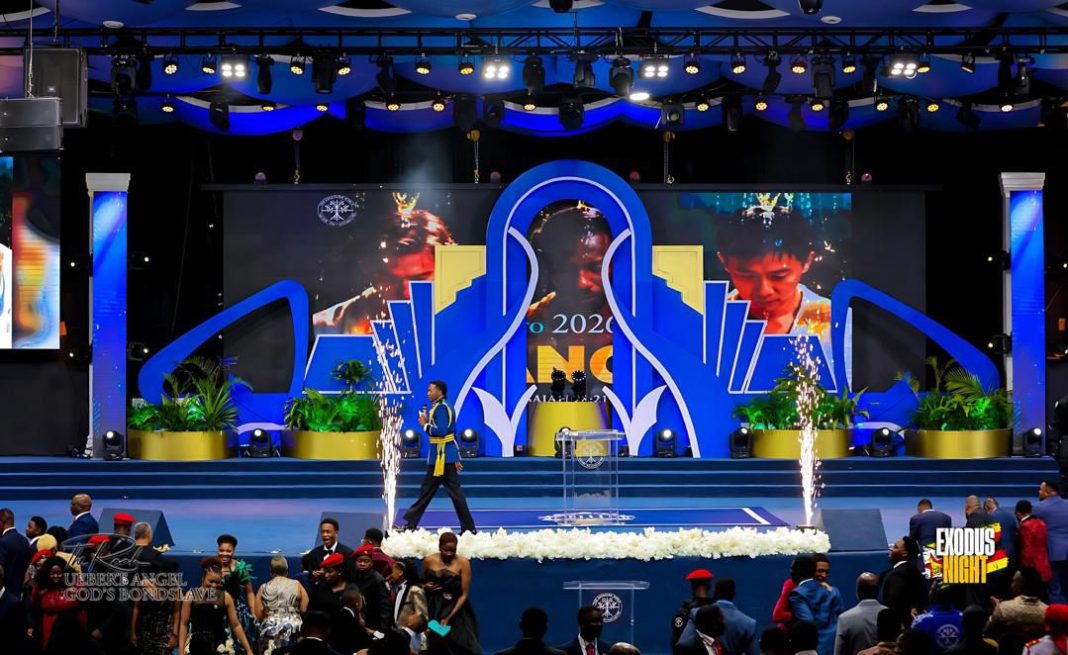
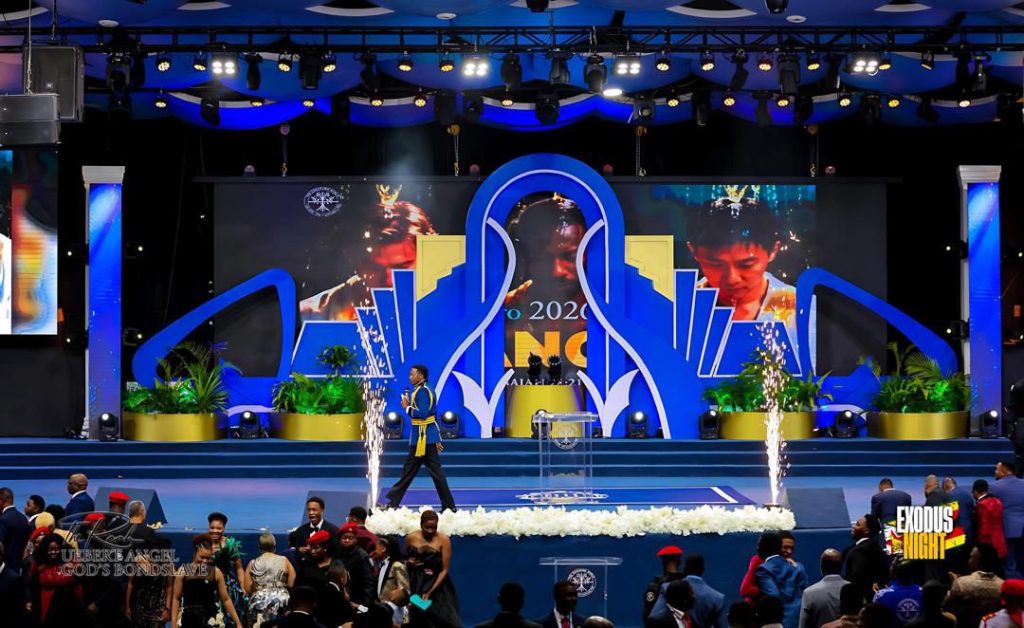
During a recent service, Prophet Uebert Angel announced what he described as a defining spiritual theme for the year ahead: 2026, the Year of the Strange Oil, anchored in Isaiah 28:21. While prophetic declarations are not unusual within charismatic Christianity, this particular announcement has drawn attention for its language, symbolism, and implications for how believers are expected to function in the coming season.
At its core, the declaration speaks to divine enablement beyond the normal order—a call for believers to operate by God’s power rather than human limitation. The phrase “Strange Oil” itself evokes the idea of an unfamiliar, uncommon anointing, one that does not follow predictable patterns or conventional expressions of faith.
Isaiah 28:21 refers to God rising to do what the prophet describes as His “strange work” and His “unusual act.” In biblical context, this points to moments when God intervenes in ways that defy expectation, logic, and established systems. By referencing this passage, Prophet Angel framed 2026 not as a year of incremental spiritual growth, but as a season marked by unprecedented divine activity.
Beyond Normal Human Function
One of the most striking elements of the declaration was the assertion that believers would function “like aliens”—not in a literal sense, but as a metaphor for operating outside the constraints of natural limitation. The imagery suggests believers moving through systems, challenges, and environments with an authority that cannot be explained by background, education, resources, or social standing.
This theme is consistent with a recurring emphasis in Prophet Angel’s teachings: that Christianity is not merely a moral identity, but a supernatural one. The message challenges the idea that power and influence are reserved for a spiritual elite. Instead, it places responsibility on every believer—regardless of perceived rank or experience—to understand and walk in what Christ has already made available.
In this framework, spiritual authority is not earned through status but accessed through identity in Christ.
Reframing Spiritual Authority
Another central element of the declaration was the emphasis on dominion. The idea that even the “lowest” believer in Christ carries greater authority than the strongest expression of dark spiritual power is not new to Christian theology, but it is often underemphasized in daily practice.
The op-ed nature of this moment lies in how the declaration confronts a passive form of Christianity—one that believes in salvation but hesitates to embrace authority. The message reframes spiritual warfare not as a dramatic confrontation, but as a positioning issue: who understands their standing, and who does not.
From this perspective, the Year of the Strange Oil is less about spectacle and more about activation. It calls believers to stop outsourcing spiritual responsibility and begin functioning from conviction, discernment, and confidence in Christ.
A Year That Demands Maturity
Importantly, the declaration does not suggest recklessness or mysticism detached from Scripture. If anything, it raises the bar. Operating beyond the natural requires discipline, discernment, and alignment. Strange oil, by its nature, cannot be handled casually.
There is also an implicit challenge embedded in the message: supernatural empowerment is not for spiritual showmanship, but for impact—in personal lives, families, businesses, and nations. It demands maturity from those who claim to walk in it.
Why This Moment Matters
For followers of Prophet Uebert Angel, the declaration sets a spiritual tone for the year ahead. For observers, it offers insight into a broader movement within contemporary Christianity—one that is increasingly unapologetic about reclaiming the language of power, authority, and dominion.
Whether embraced fully or approached with cautious reflection, the Year of the Strange Oil invites believers to reassess how they understand faith itself: not as survival, but as supernatural participation in what God is doing.
As 2026 approaches, the real test will not be the declaration itself, but how those who received it choose to live it out—quietly, consistently, and with responsibility.